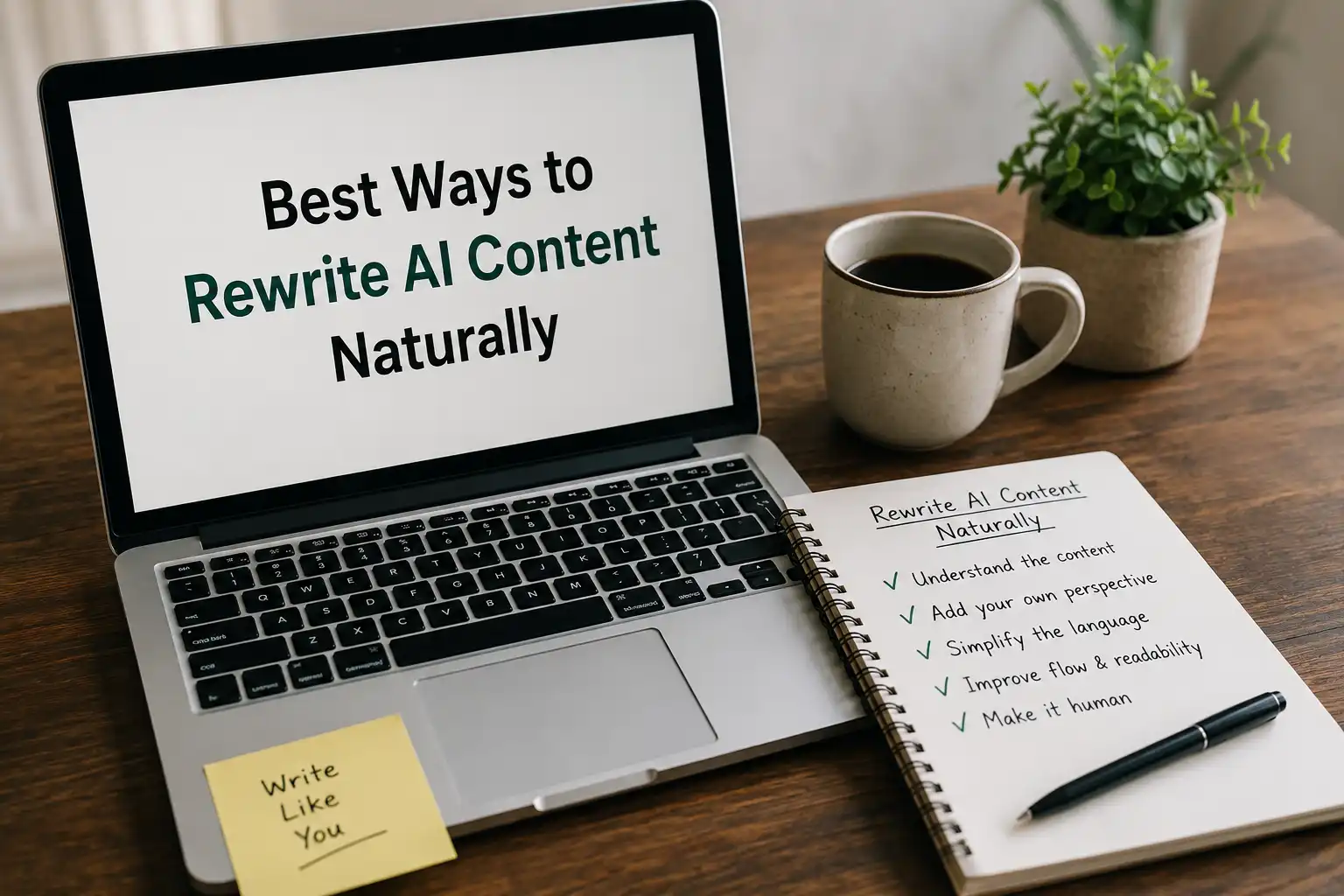
As content creation continues to evolve in 2026, mastering this with human-like AI-generated content is a necessary requirement to capture audiences while remaining undetected. This guide has covered the key rewrite tips that can make a rigid AI-generated text turn into a seamless, original story that rings true.
Some of the major tips include adding personal anecdotes and sentence structures to replicate natural human communication; while avoiding repetition in sentence structure, subtle idioms and emotion in sentences should be included. The following blog will help you to understand all the tips to rewrite AI content naturally.
Why Does AI Text Need Rewriting?
As digital content creation continues to evolve, AI detection tools have become a vital obstacle, scanning any written content to determine its origin. These systems analyze advanced patterns, sentence structures and stylistic analysis to identify the probability score which shows if the content is machine or human generated. A high human probability score indicates that the text was probably written by a person, whereas a low text score indicates that it was likely written by an AI system, possibly with repetitive phrases or without coherence.
In 2026, there are plenties of risks when it comes to the usage of unedited AI-generated content. Google and others have come up with stricter measures against low-quality ‘AI content’ that could impact rankings and even pages that are not showing up in search results. This can harm website optimization for blogs, articles and marketing materials and cause a loss of traffic and revenue. Academic and professional papers are held to the same standard, where plagiarism tools are now combined with AI detection, and plagiarism is a serious consequence of being rejected or finding oneself in an ethical quandary.
The answer is in strategic rewriting, which involves creating natural voices that the detector fails to recognize, yet are high-quality. By incorporating personal observations, using different vocabulary and making the text relevant, creators can craft text scores that seem to be written by humans. This not only avoids penalties but also provides readers and algorithms with valuable content that is engaging.
Steps to rewrite AI Content Naturally
Step 1: Analysing the Original AI Text.
One of the first steps is to carefully analyze the original content to detect signs of AI-generated content. Watch for patterns such as repetitions in phrases, formal language, or sentential patterns that are more artificial than natural. You can use a variety of AI tools to determine the likelihood that the text is AI-generated, with a target of 80% AI likelihood score or higher. Read aloud to identify awkward flows – people often write in a style that has variations in tone and rhythm which AI cannot replicate. This analysis will be a foundation for effective rephrase AI efforts, and you will be able to know what needs to be paid more attention.
Step 2: Divide into paragraphs and include human elements.
Break down the AI text into smaller paragraphs to work on individually. Address them one at a time with a paragraph rewrite and add personal style, anecdotes or conversational features. If the original reads: The benefits are many, add details such as: I’ve personally experienced how these benefits can enhance your workflow, making tasks more enjoyable and smoother. Use contractions, a range of sentence lengths and emotion to make the humanized text feel relatable. This action helps to bring the static content to life, making it dynamic and engaging.
Step 3: Originality using Synonyms and Rephrasing Ideas
To avoid plagiarism marking and make AI content unique, carefully restructure content and make use of synonyms and different thought patterns. Replace ‘utilize’ with ‘use’ or ‘harness’, and reword the sentences—sentences should be restructured: ‘The process involves several stages’ should be ‘You’ll go through a series of steps that build on each other’. Notice the main point, and change the main point as long as you stick to the intention. Utilize a thesaurus or online synonym generator as needed, but avoid using words that disrupt the flow of the text. This rewrite stage is very important to make content that stands alone.
Step 4: Review and Refine using Humanization Tools
After rewriting, check your draft for any traces of AI. Use specialized tools that provide humanization feedback, like readability, perplexity, and burstiness scores. These metrics measure the level of ‘human-like-ness’ of your text; low perplexity may mean it is predictable, which is a typical trait of AI text. Edit by making it more authentic by adding questions, some imperfections, or idioms. Read several times and give and take subjective input from a peer. This enhancement makes your humanized content readable and also earns low scores on automated tests.
Step 5: Check with a few detectors for a low AI score.
Finally, pass your final content through several AI detection tools to be sure there is minimal AI content. Run a free AI detection service with confidence using a score of less than 10% chance of being plagiarized, such as GPTZero or Originality.ai. If scores are meaningful, review and rewrite paragraphs. Multiple detectors with multiple algorithms, cross verification, means that you can be confident in the final output product. A verification offer is a crucial component of the content landscape in 2026, with this process becoming essential for maintaining credibility and SEO performance.
With the help of these rewrite steps, you will always create detector-proof, original and compelling humanized text. The best way to do that is to see it regularly and get it into your muscle memory, and soon, rephrasing AI content will be second nature.
Conclusion
As the world moves forward in 2026, ensuring content mastery and producing human-like responses is crucial for creators aiming to create content that connects with their audiences without being flagged. In this guide, we’ve considered some key rewritten content tips that will help you to turn AI-generated content into natural, authentic stories that connect with your audience.
Try different methods: Write a short paragraph a few different ways, then review the engagement data of your audience. These practices will hone your abilities, eventually allowing you to craft human-like AI rewrites without a second thought.
FAQs
Q1. How can AI-generated written content be improved in a safe manner?
The best way is to use original thinking, tangible evidence and manual review. Outline or brainstorm with AI, but write the final draft with personal knowledge and proper citations.
Q2. How does rewriting text sound natural?
Sentence length and style vary, there are strong transitions, and a not-so- predictable sentence structure helps to establish a human voice.
Q3. Does rewriting content still work for SEO?
Yes. Humanized SEO content is likely to do better, as it is easier to read and engage in.
Q4. Does rewriting content assist in Detector checks?
Yes. Improved writing variation minimizes common AI detection patterns.
Q5. Would rewriting content be of benefit to the freelancer?
Yes. It is beneficial for creating professional, natural sounding customer copy.